

Last update:
This page provides an overview of the project’s current development progress through in-game screenshots, gameplay systems, 3D artwork, hardware validation and development photos. The content presented here reflects active development and demonstrates both the technical and artistic direction of the project.
Welcome to the GoldClaim: Starfall Nuggets Development Showcase.
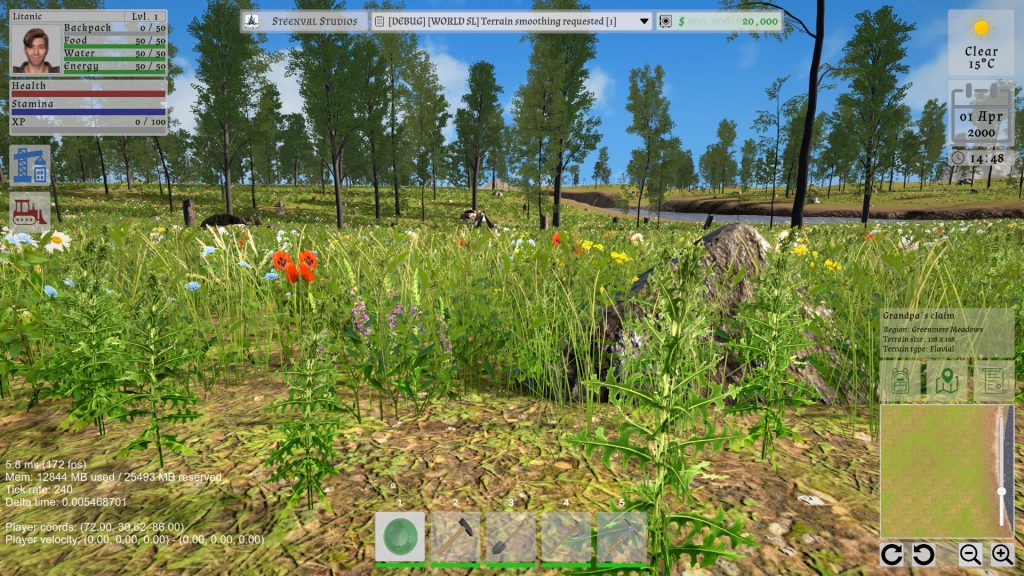
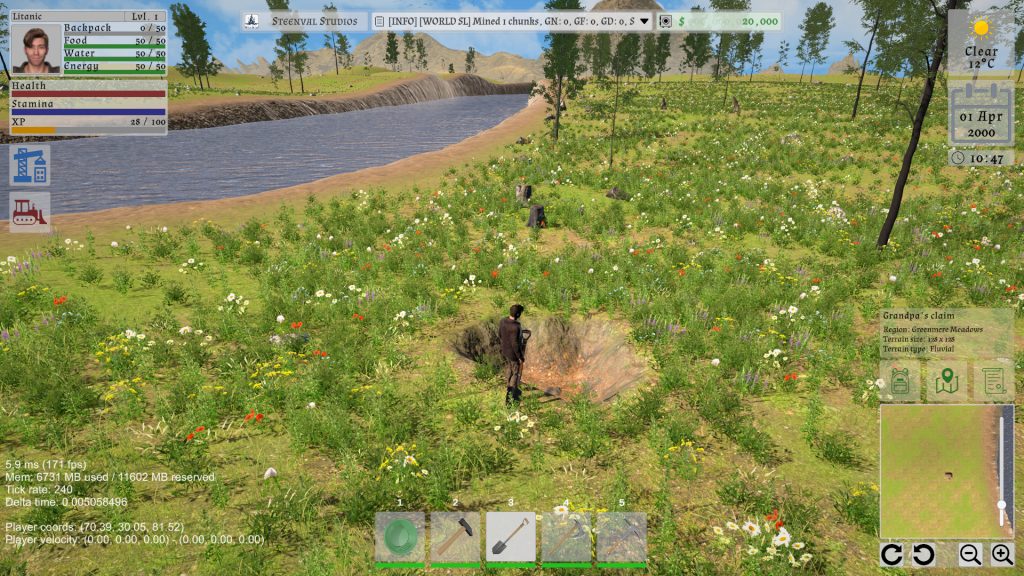
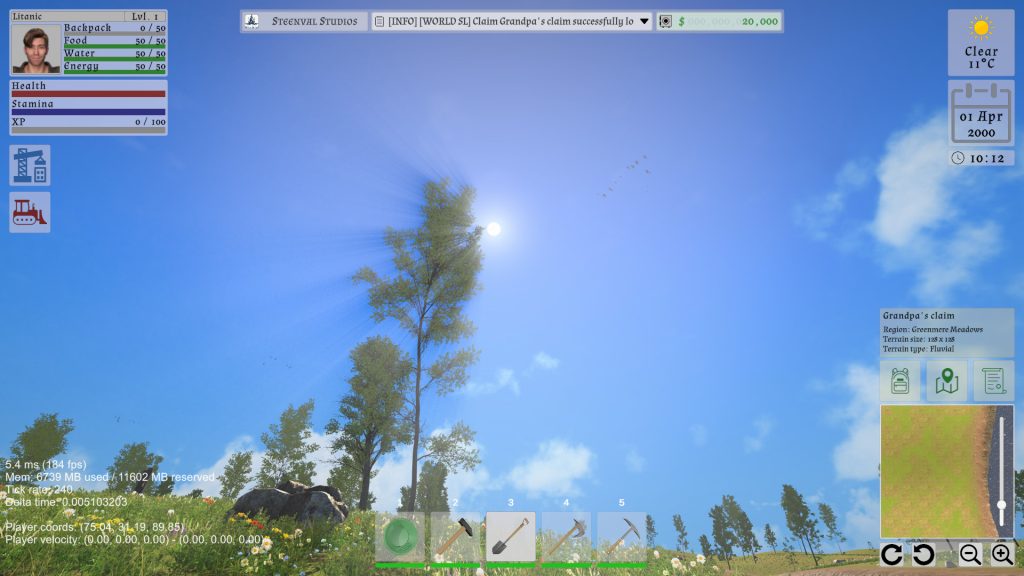
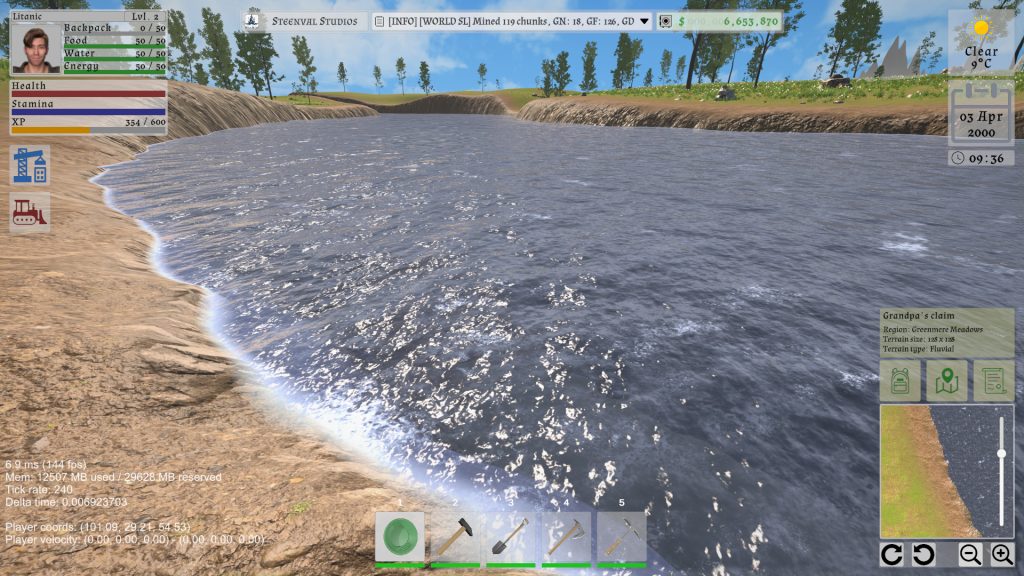
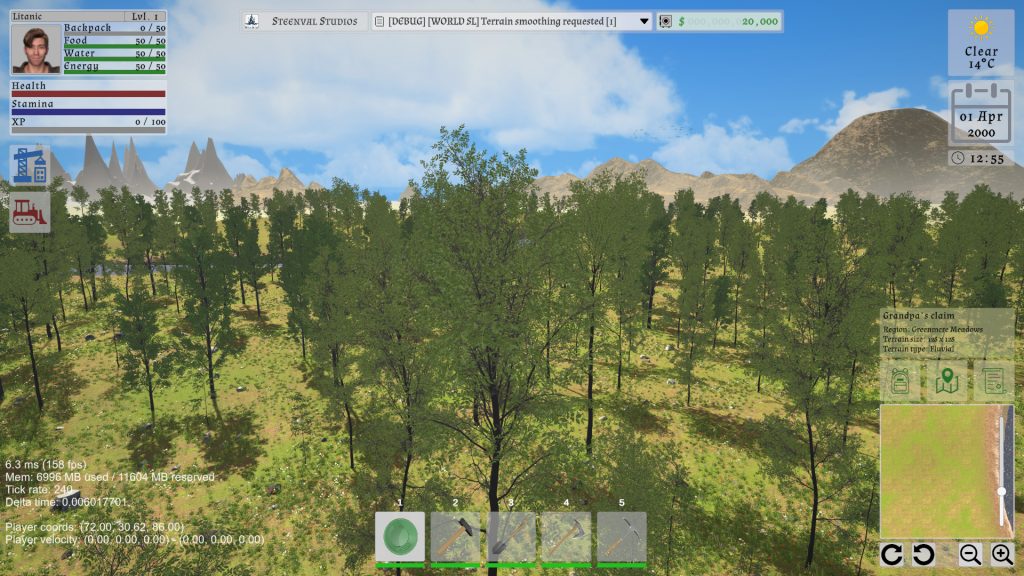
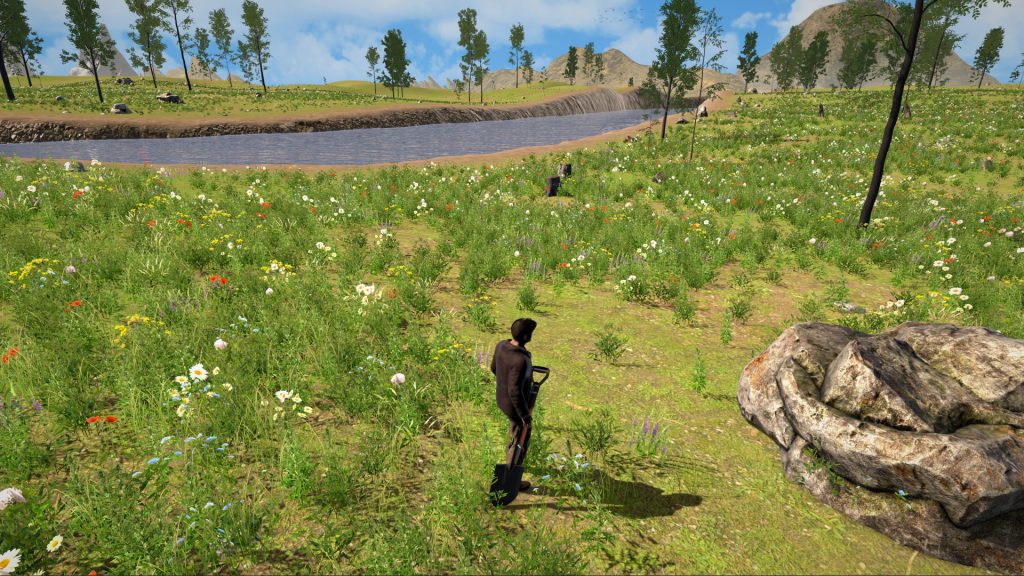
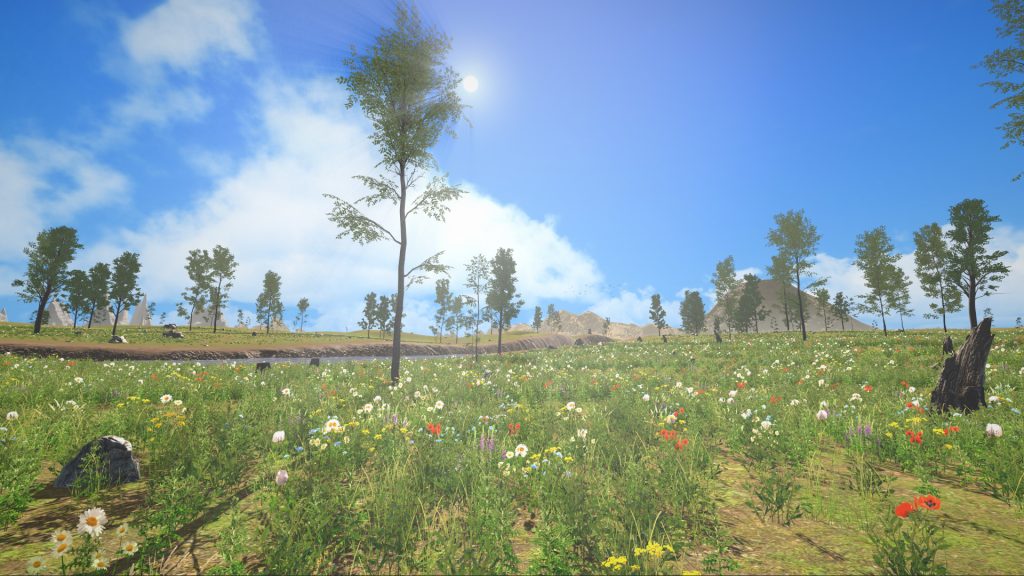
Current in-game screenshots
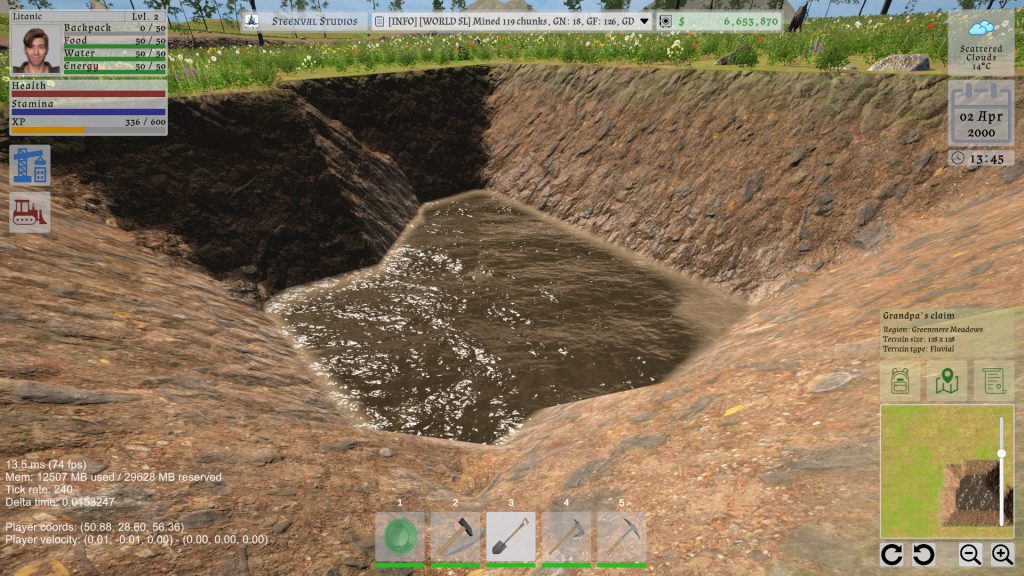
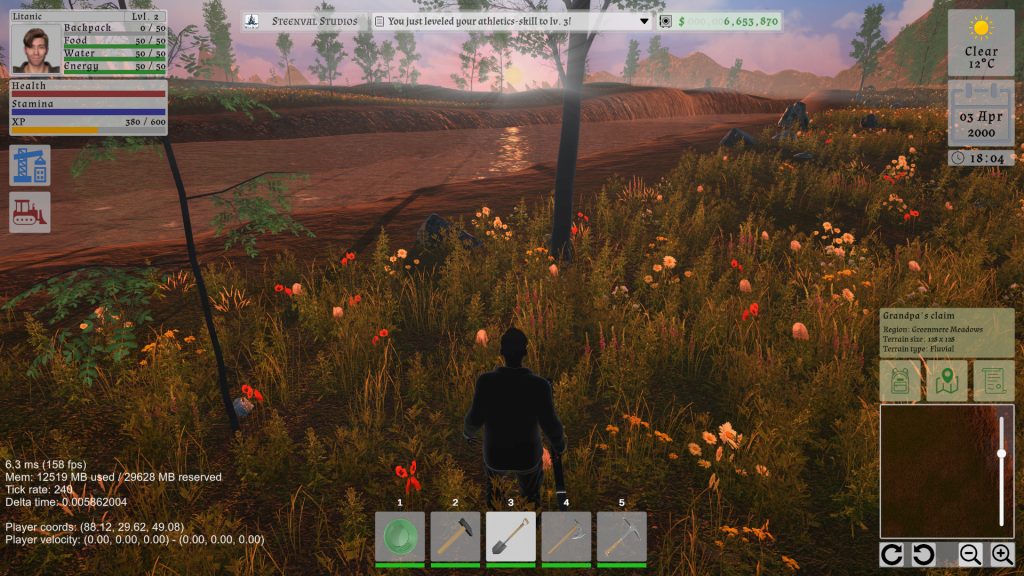
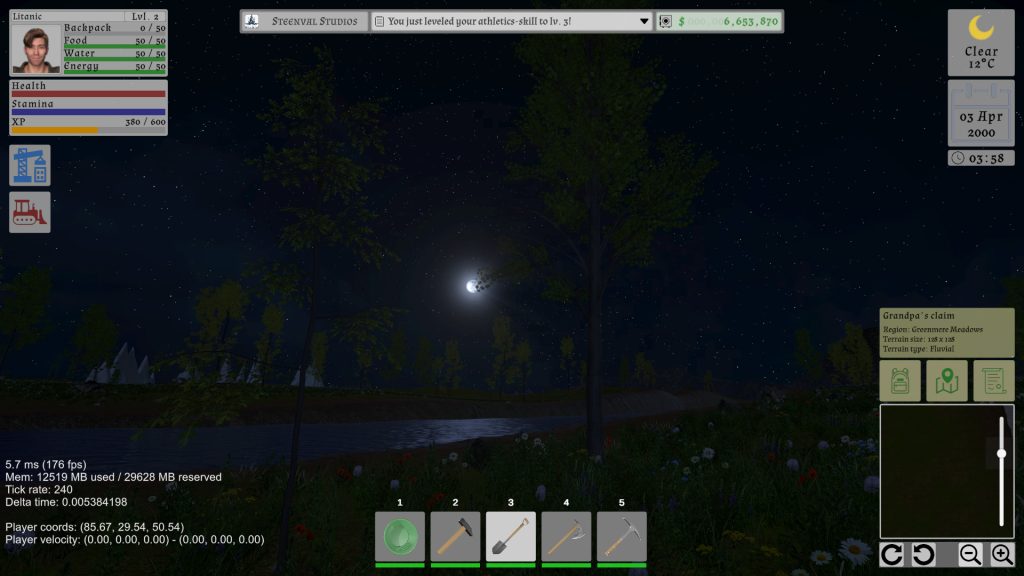
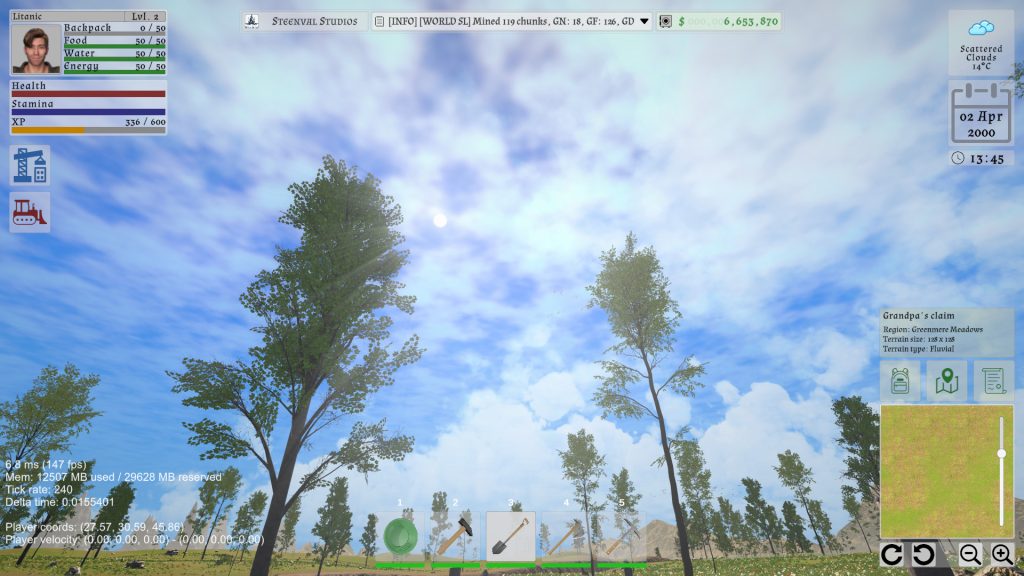
Every week notable changes are made to the game in overall, but progress would be stagnated if a page/post were to be made dedicated to those. Hence why this section exists: screenshot dump! We will make sure only the latest screenshots will be shown here, and that they’ll speak for themself.
Game Characters and Art Direction: From 2D pixel-art to 3D animated rigs

GoldClaim’s visual style has evolved considerably throughout its development. During the early concept phase, every character was to be hand-crafted as pixel art in Aseprite, drawing inspiration from classic top-down RPGs. This approach allowed rapid prototyping of characters, animations and gameplay systems while establishing the project’s artistic direction.
As development progressed, however, the limitations of this workflow became increasingly apparent. Character animation proved far more time-consuming than initially expected, with production time growing significantly for every additional animation frame. Combined with an expanding cast of over fifty characters and a growing library of animations, maintaining the original pixel-art approach became increasingly impractical. Although preserving the game’s pixel-art charm was highly desirable, alternative approaches—including fully three-dimensional characters—became difficult to ignore.
A hybrid solution was explored, combining orthographic stylistic rendering for characters and objects with a perspective camera for the terrain. While this worked reasonably well in many situations, it introduced noticeable alignment and consistency issues as characters moved toward the edges of the screen. Perspective distortion could be partially compensated for through carefully designed 45-degree tilted top-down artwork and dynamic stretching and compression of character sprites, but these techniques became increasingly difficult to maintain, particularly on modern widescreen displays. Transitions in the art direction became inevitable, as the core fantasy of the game had to preserved at all cost: A deep RPG mining frontier experience.
As GoldClaim expanded into a fully three-dimensional industrial RPG, its visual direction evolved alongside it. The project transitioned to detailed 3D characters and environments, enabling large-scale mining machinery, terrain deformation and cinematic storytelling to be presented with a much higher level of visual fidelity while preserving the approachable bird’s-eye perspective that defines the game’s gameplay. Rather than a sudden change in direction, this transition reflects the natural evolution of the project as both its technical capabilities and long-term vision matured.
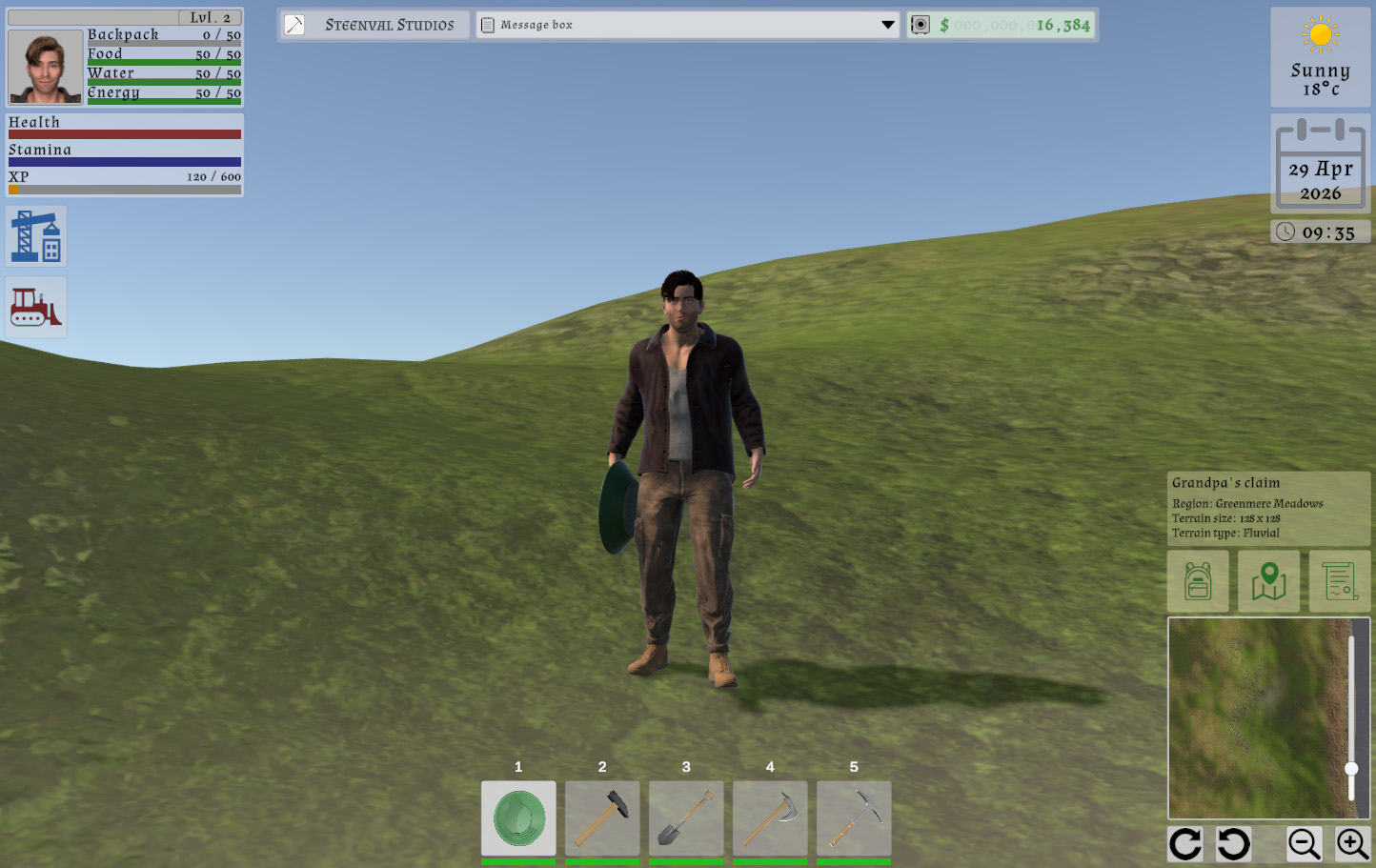
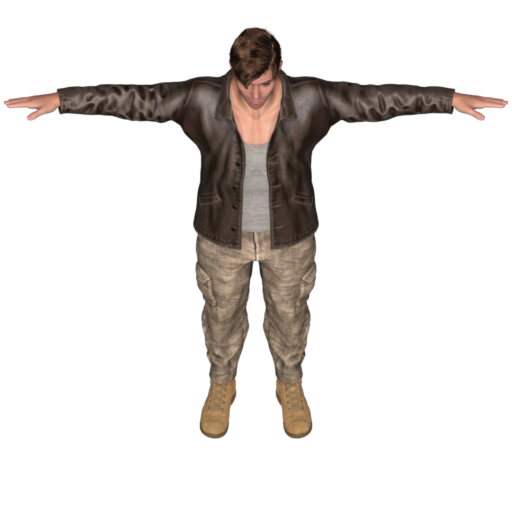
As development progressed, fully rigged 3D characters became a necessity rather than a preference.
While stock animation libraries were available and significantly reduced production time — requiring only minor adjustments such as refining hand poses, finger placement and tool handling — they would still have put the targeted early 2027 MVP release at risk. Instead, we invested in developing an automated content pipeline by scripting character poses, studio lighting, materials, and the complete export/import workflow through our own tooling.
Today, this pipeline allows us to sculpt and transform a base mannequin into a fully rigged, textured and clothed character ready for integration into the game engine with minimal manual intervention. Character budgets are currently targeted at approximately 30,000–60,000 triangles for villagers and workers, and 100,000–180,000 triangles for heroes, antagonists and, naturally, the player character.
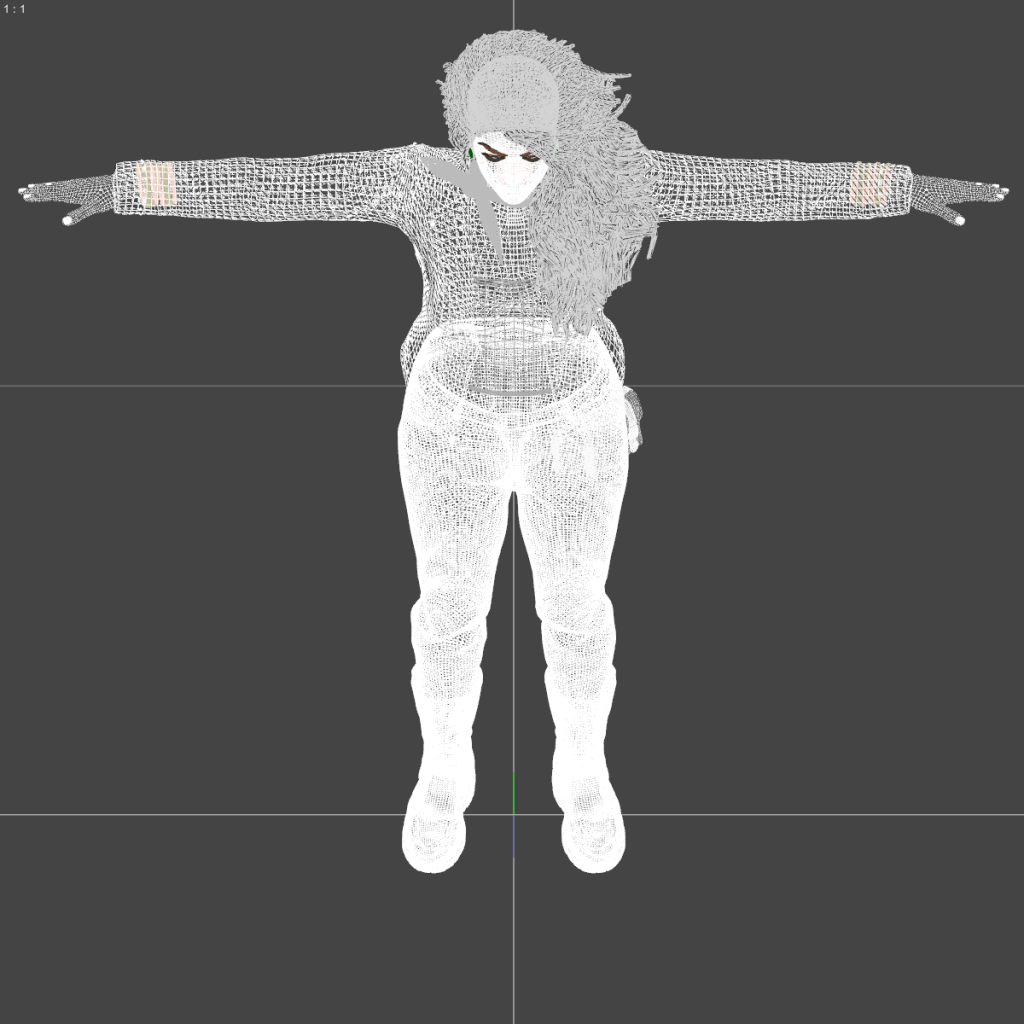
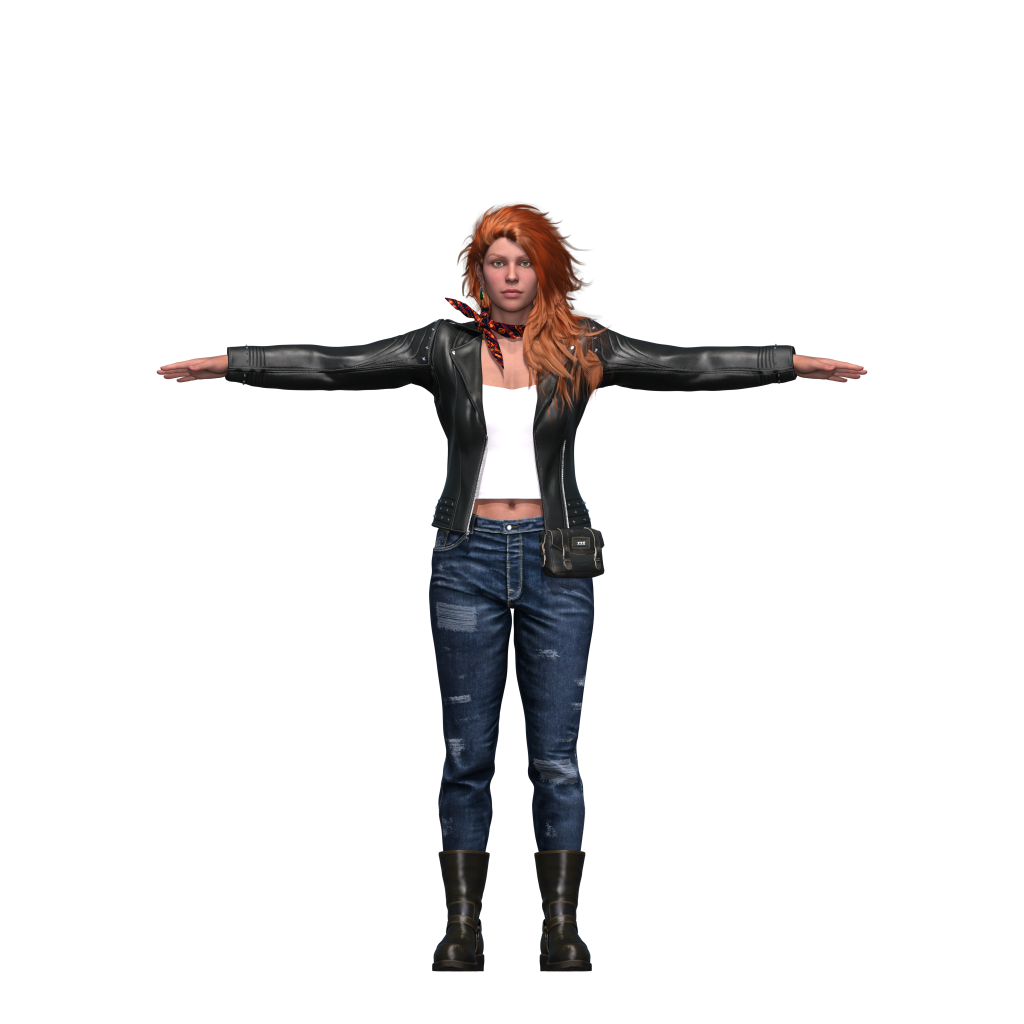
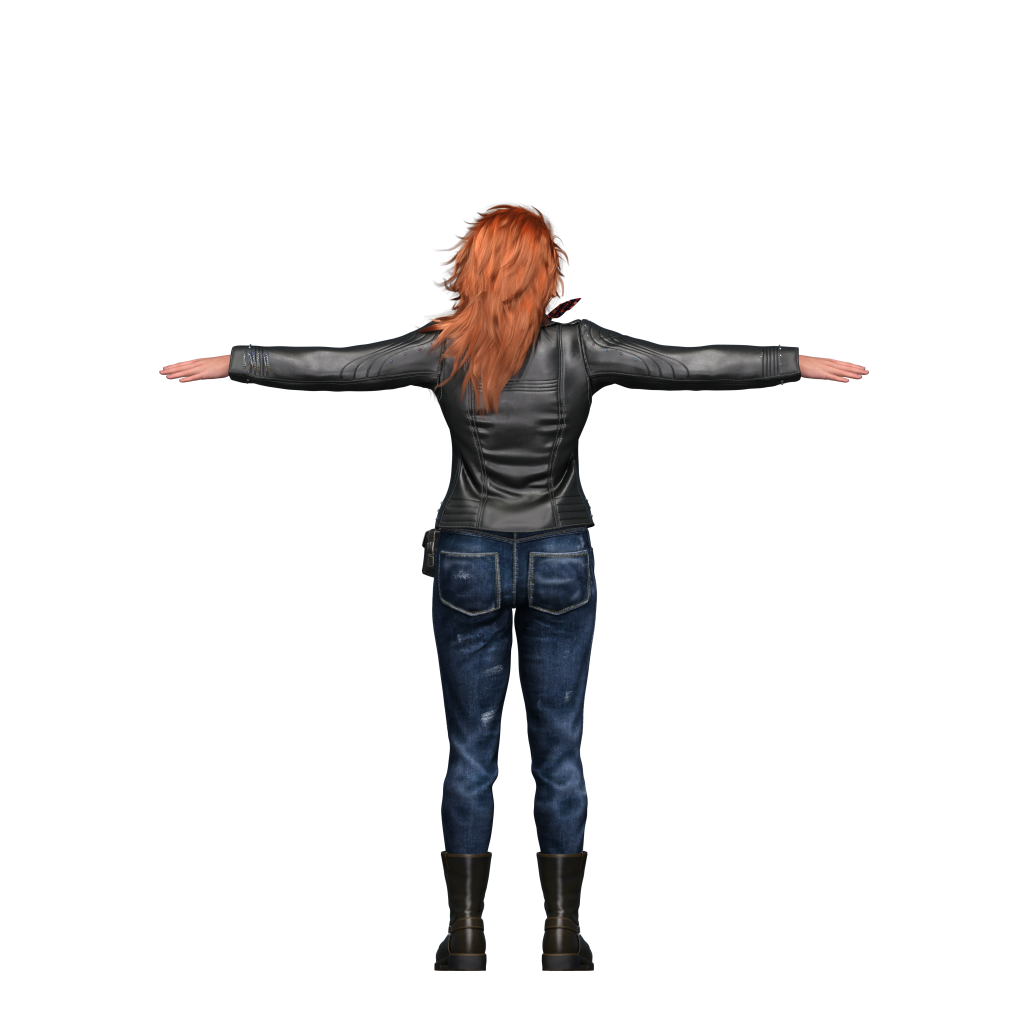
The result is a production pipeline designed for long-term scalability. As GoldClaim continues to grow, new characters can be created efficiently while maintaining a consistent visual style, allowing development time to be spent on gameplay systems, storytelling and new content rather than repetitive asset production.
In the end, this took a toll on the perceived coziness of GoldClaim as pixel-art and cartoon-style characters no longer were a fit. Most of the concept-art remains useful to base the 3D models on, but the initial presentation and promo-art hardly reflects the actual in-game art by now. Whether that’s a good or bad thing is hardly relevant at this stage however — preserving the core fantasy and MVP-targets exceeds the currently favored art-direction. But ever since, more time is being spent on stylistic presentation of its characters, the main story and the story-backgrounds of all key-characters. The art-direction is now locked in, and time-wise it’s within a reasonable margin, leaving other options such as additional portrait background-art for dialogues/cut-scenes still to be explored.
Game Characters: Portraits and facial rigging
Creating a believable cast of characters extends far beyond modelling alone. GoldClaim uses an automated production pipeline that generates character portraits, facial expressions, materials, rigging, exports and game-ready assets from a single source model. This tooling ensures visual consistency between dialogue portraits and in-game characters while reducing manual production time, making it practical to build and maintain a large cast of unique NPCs and story characters.
Traditionally, creating dialogue portraits requires manually posing, lighting and rendering every individual expression for each character. As the cast of GoldClaim continued to grow, this approach quickly became impractical. To solve this, we developed a fully automated portrait generation pipeline.
Character poses, facial expressions, camera positioning, studio lighting, materials and render settings are all configured through custom scripting, allowing consistent portrait sets to be generated directly from the game-ready character model with minimal manual intervention. The result in time-savings was nothing less than astonishing. The character base for the scripts has been reduced to a gender (male/female), and each base is posed and given an emote once, while the scripts ensured the right camera, lighting and pose + emote combination was used. This means per character the choice was down to choosing pipeline in flavor A or B, or rather, the male of female pipeline. At the same time, the execution of these pipelines solidified consistency across all characters, although a lot of tuning was necessary before this was possible as each character’s model and face is sculpted individually, and even clothing, hair and props (e.g. a scarf around the neck) became hostile. After a couple of days of finetuning, the result for automated posing and emotes finally became humane and readable.
That all said, player characters, heroes/protagonist characters and antagonists still get special treatment which became possible due to the newly gained time-savings, and perhaps this might also have been the only way for a one-man studio to “just design and create 50+ characters before the MVP target”, while there’s still a whole gaming-engine waiting to be built, and we haven’t even gotten to the animations yet.
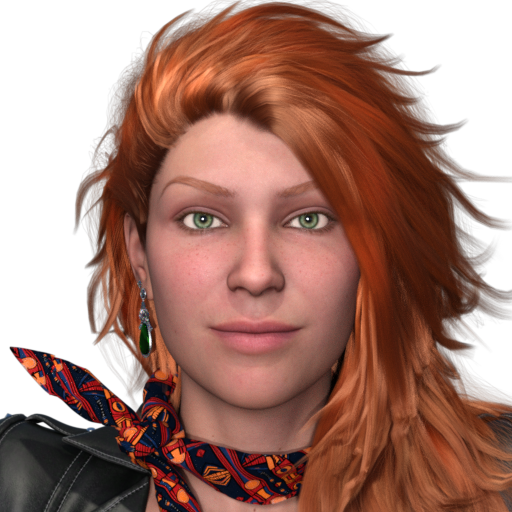
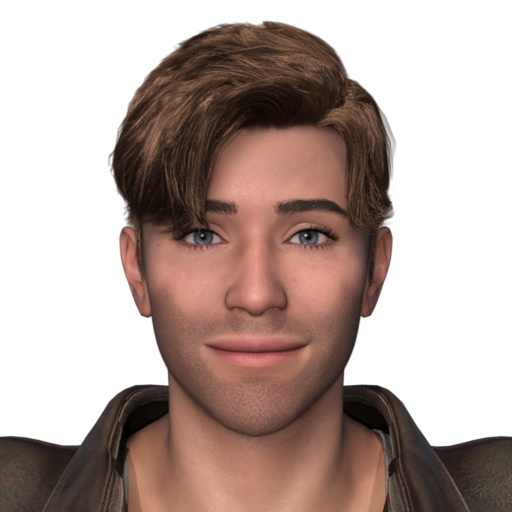

Because portraits are generated from the same source model used in-game, visual consistency is maintained throughout the project. Updating a character’s hairstyle, clothing, facial features or materials no longer requires recreating an entire portrait library by hand. Instead, portrait sets can simply be regenerated through the automated pipeline, dramatically reducing maintenance effort while ensuring every dialogue portrait accurately reflects the current state of the character.
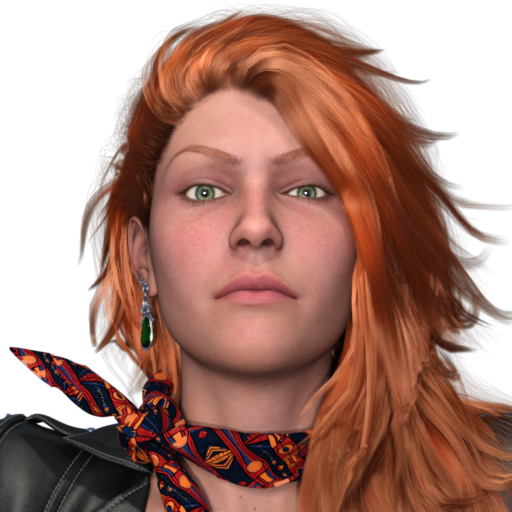
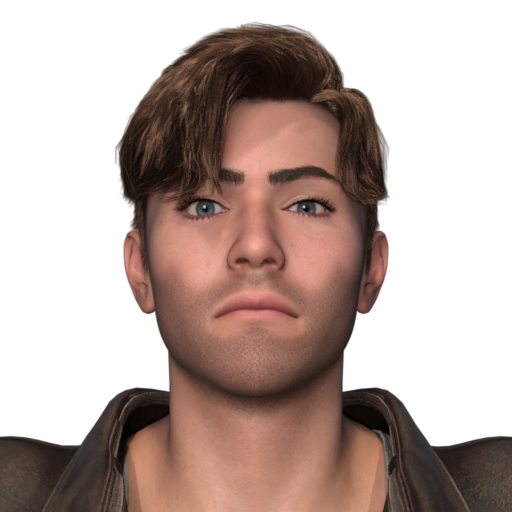
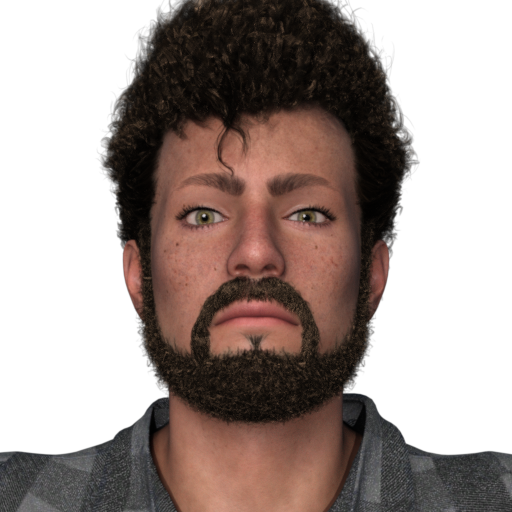
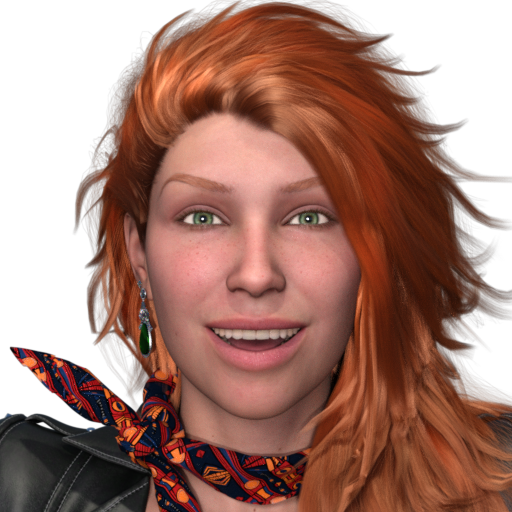
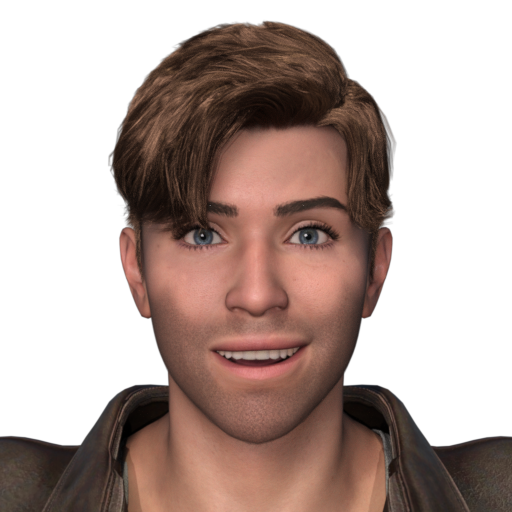
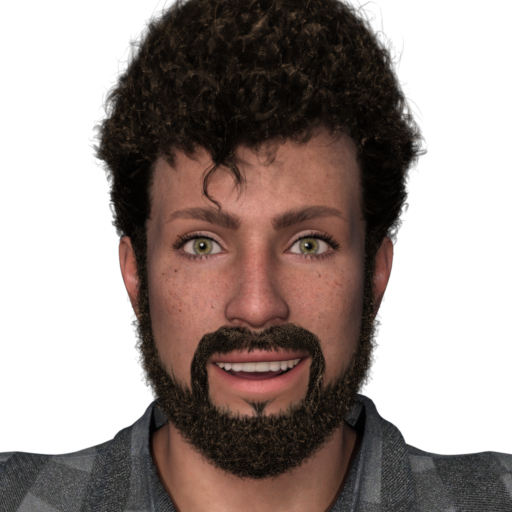
By automating the entire portrait workflow per gender (as the only limit was that facial expression could not be generalized across them), character creation becomes a repeatable production process rather than a collection of manual tasks. This enables the project to scale from player characters, a handful of protagonists to a large cast of villagers, merchants, companions and antagonists, while ensuring every portrait remains synchronized and recognizable with its in-game counterpart throughout development.
For the final-art pass, the portraits are curated per each of the 20 emotes which will be available through the dialogues in either common gameplay, or during quests. These will be supported with background art for as much as possible, but as it stands, art-wise we’re already pushing the limits of what is sensible possible without a dedicated art-team.
In-game art: The UI and overworld
The user interface has been designed to provide immediate access to the information required during exploration, mining and company management while remaining unobtrusive during gameplay. Rather than relying on complex menus, frequently used information such as player status, tools, time, weather, finances and navigation remains accessible directly from the main game view, reducing unnecessary interruptions and keeping the player focused on the world.
GoldClaim adopts a clean, functional interface inspired by simulation and management games, balancing accessibility with depth. Every element is positioned with purpose, allowing both new and experienced players to quickly assess their surroundings, equipment and objectives. As development progresses, the interface continues to evolve alongside new gameplay systems while maintaining a consistent visual language across the project.
The user interface has been designed around three complementary systems: the heads-up display (HUD), the in-game notebook and the world map. Each serves a distinct purpose while sharing a consistent visual language, allowing players to quickly access information without disrupting the flow of gameplay. The interface aims to remain informative rather than intrusive, presenting essential information only when and where it is needed.
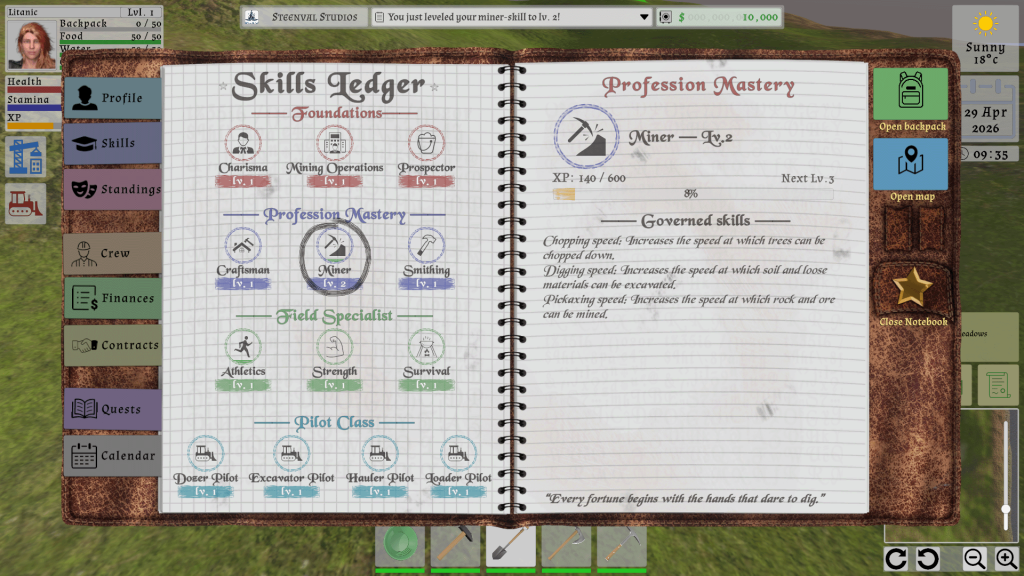
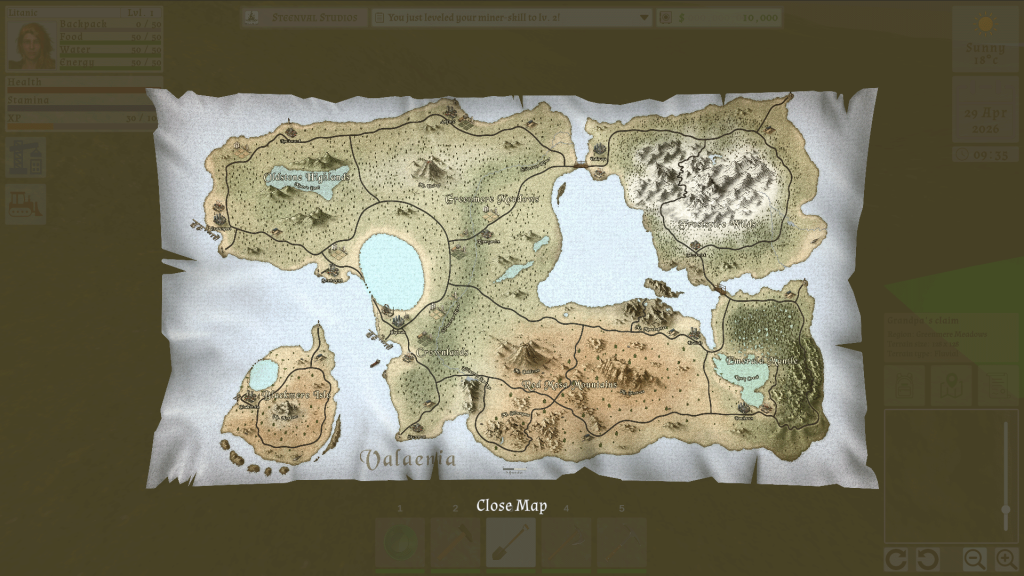
The HUD focuses on moment-to-moment gameplay, providing immediate access to player status, equipped tools, weather conditions, time, finances and contextual world information. The notebook acts as the player’s central knowledge base, recording quests, discovered mechanics, characters and collected information as the adventure progresses. The world map complements these systems by supporting navigation, claim management and regional exploration, helping players plan both short-term tasks and long-term expansion.
Although the interface shown here represents an active work in progress, its overall structure has remained intentionally stable throughout development. This allows new gameplay mechanics to be integrated without requiring fundamental redesigns, ensuring a familiar experience as the project continues to expand.
Gameplay art: Digging terrain
Terrain excavation forms the foundation of GoldClaim’s mining gameplay. Rather than relying on predefined digging effects or simple terrain decals, the world responds dynamically to excavation by revealing the underlying soil composition. As vegetation is removed, the terrain transitions naturally from grass-covered surfaces to exposed earth, allowing mining operations to leave visually persistent changes that accurately reflect the player’s activity.
Beneath the surface, GoldClaim simulates distinct geological strata, giving excavated terrain a layered appearance that resembles real-world soil deposits. These material transitions not only improve visual realism but also help players intuitively distinguish between untouched terrain, recently excavated ground and the deeper layers revealed through continued mining. Together, these systems transform excavation into a lasting interaction with the environment, ensuring that every claim gradually develops its own unique landscape shaped entirely by the player’s decisions.
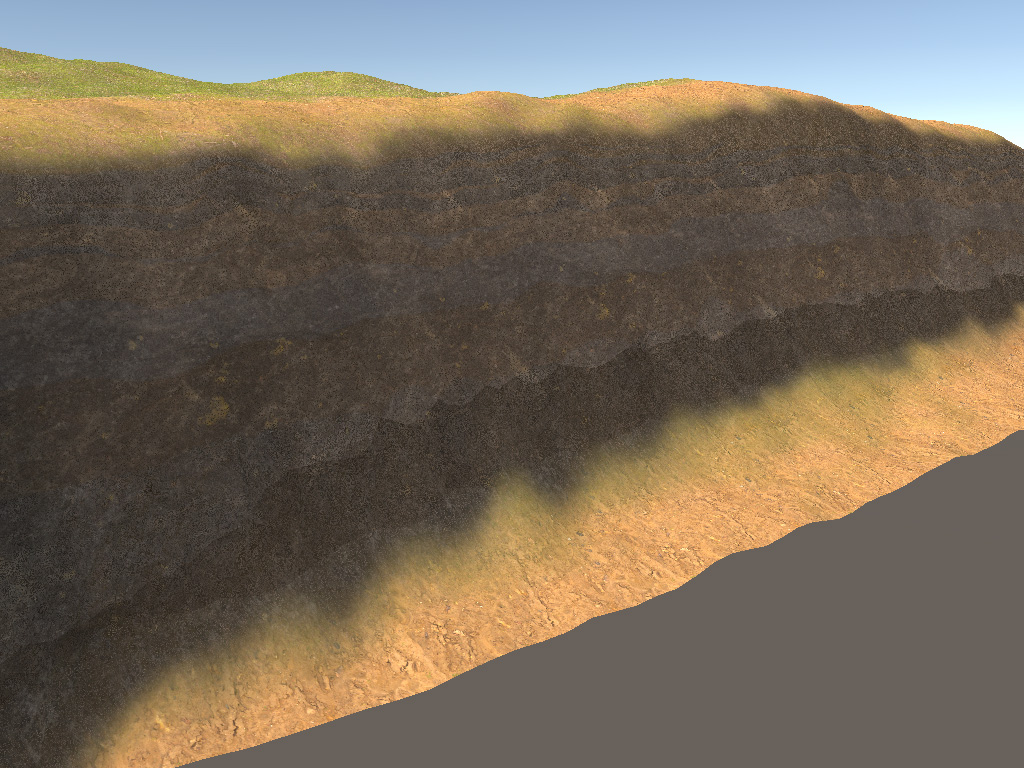
Ultimately, terrain in GoldClaim is more than a surface to walk across—it is a living part of the gameplay. Every cut into the landscape, every exposed soil layer and every excavated claim contributes to a world that visibly evolves alongside the player’s progress, making each mining operation leave a lasting impression on both the environment and the story of the company being built.
Gameplay: The RPG-fantasy
Forge your legacy
GoldClaim blends industrial management with deep role-playing progression. Every action contributes to the story of both your character and your company, creating a career that is uniquely your own.
GoldClaim treats your character and its reputation as more than a single morality score. Your actions influence multiple groups independently, allowing rival mining companies and settlements to develop their own opinions based on your decisions. Rather than being universally loved or hated, your reputation becomes part of the unique story you create throughout Valaenia.
A living character
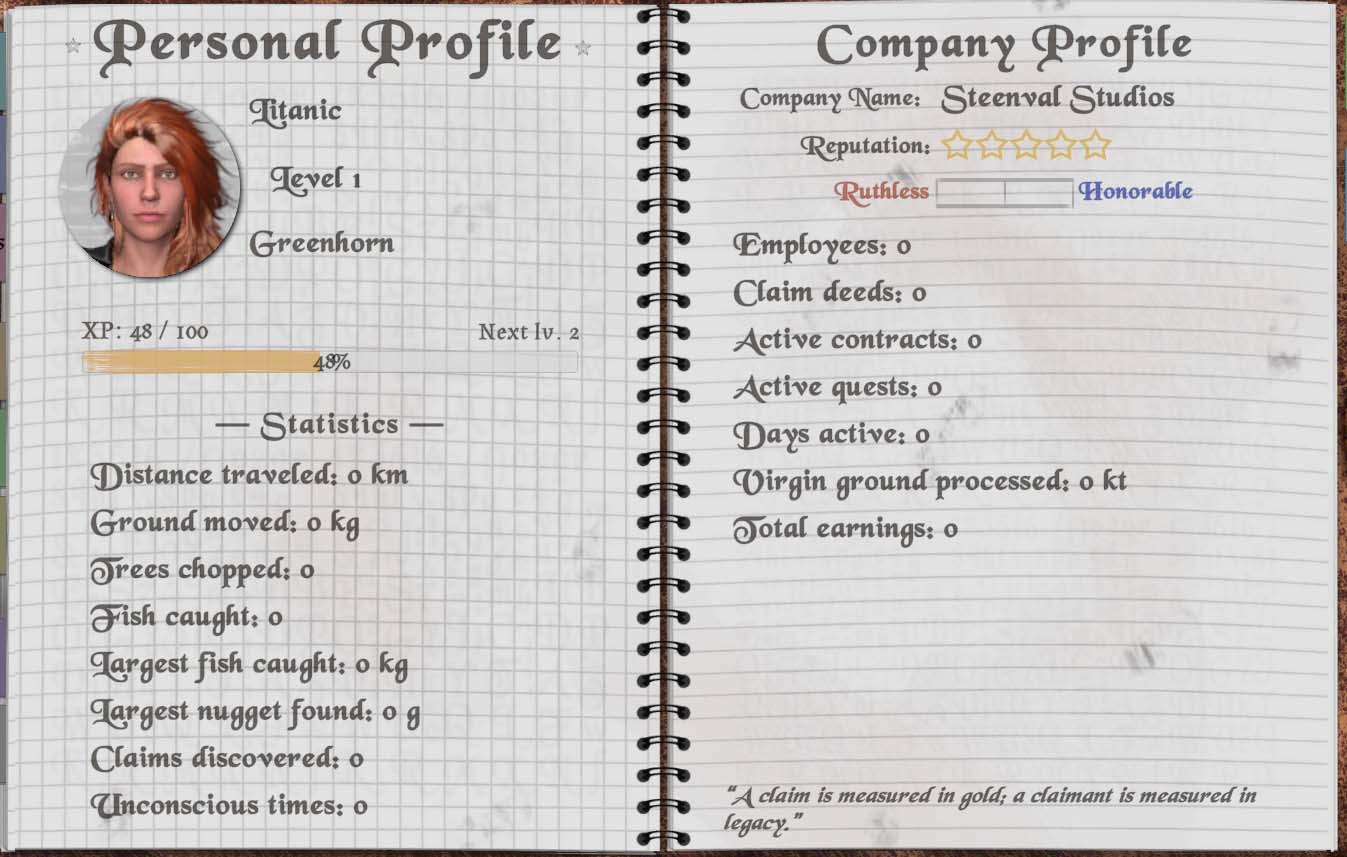
Every mining legend begins as a newcomer.
GoldClaim follows your journey from an inexperienced greenhorn into one of Valaenia’s most respected prospectors. As your adventures unfold, your personal profile grows alongside you, recording milestones, discoveries, statistics and achievements accumulated throughout hundreds of hours of gameplay.
Your profile becomes a living journal of your career. Every kilometre travelled, every nugget discovered, every claim explored and every tonne of earth moved contributes to the story of your character.
Building More Than a Company
GoldClaim measures more than wealth.
Your company profile records the growth of your mining enterprise throughout its lifetime. Employees hired, claims acquired, contracts completed, ground processed and total earnings together tell the story of how a single frontier operation evolved into one of Valaenia’s great mining companies.
Long after individual discoveries have been forgotten, your legacy remains written in the history of the world you helped shape.
Skills earned through Experience
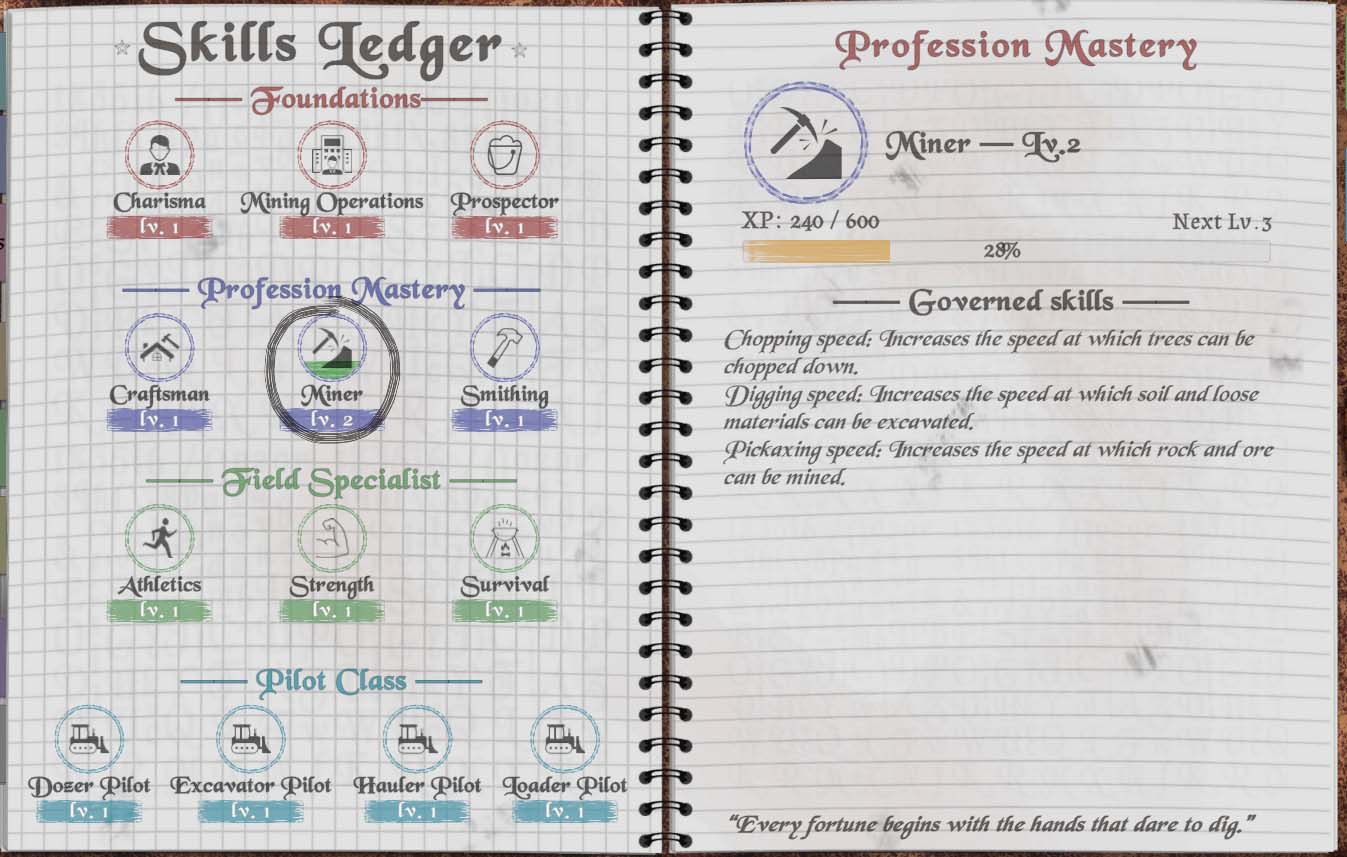
GoldClaim does not ask players to distribute arbitrary skill points after reaching a level.
Instead, every profession develops through practical experience. Prospect more often, and your understanding of geology improves. Spend time operating heavy machinery, and your competence behind the controls gradually increases. Invest in smithing, athletics, leadership or survival, and those disciplines naturally evolve alongside your playstyle.
The result is a progression system that reflects what players actually choose to do rather than forcing predefined character builds.
Reputation Shapes Opportunities
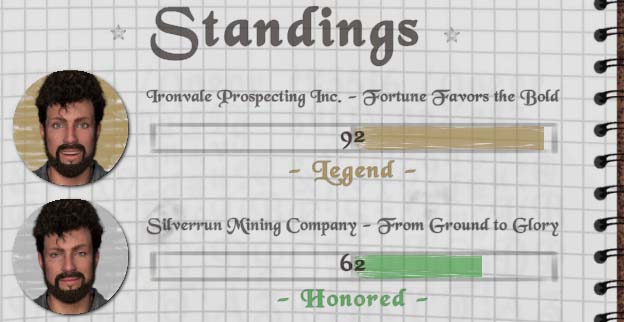
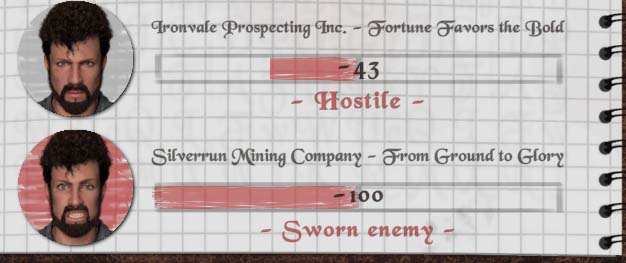
The mining industry is competitive by nature. Throughout your journey, rival companies observe your successes, setbacks and business decisions, gradually forming their own opinions of both you and your organisation. Earn respect through fair competition, successful contracts and consistent results, and competitors may acknowledge your achievements as a worthy rival. However, aggressive expansion, broken agreements or repeated interference with their operations can quickly turn former acquaintances into determined adversaries.
Rival Mining Companies
Unlike traditional faction systems, rival mining companies each maintain their own opinion of your enterprise. Some may become trusted industry partners, while others may view your growing success as a direct threat to their own ambitions. These relationships provide a foundation for future interactions, business opportunities, rivalries and story-driven encounters throughout Valaenia.
Settlements Remember your Actions
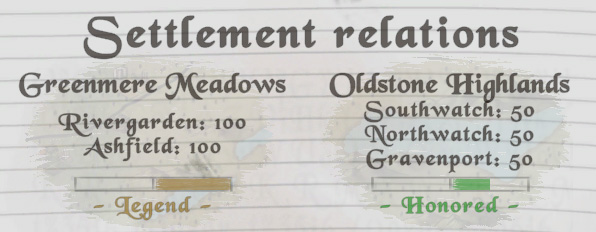
Your reputation extends far beyond the mining industry alone. Every settlement and region remembers your actions, allowing local communities to gradually form their own opinions of both you and your company. Helping rebuild a struggling frontier settlement, honouring contracts and supporting local businesses may establish you as a respected claimant. Neglecting responsibilities, damaging the environment or repeatedly putting profits before people may instead leave an entirely different legacy.
Regional reputation is tracked independently across Valaenia, allowing players to become celebrated in one part of the country while remaining complete strangers—or even openly unwelcome—in another. As these relationships evolve, they provide the foundation for future contracts, services, prices, opportunities and dialogue, ensuring that every region responds naturally to the story the player creates.
Hardware: Gaming handhelds
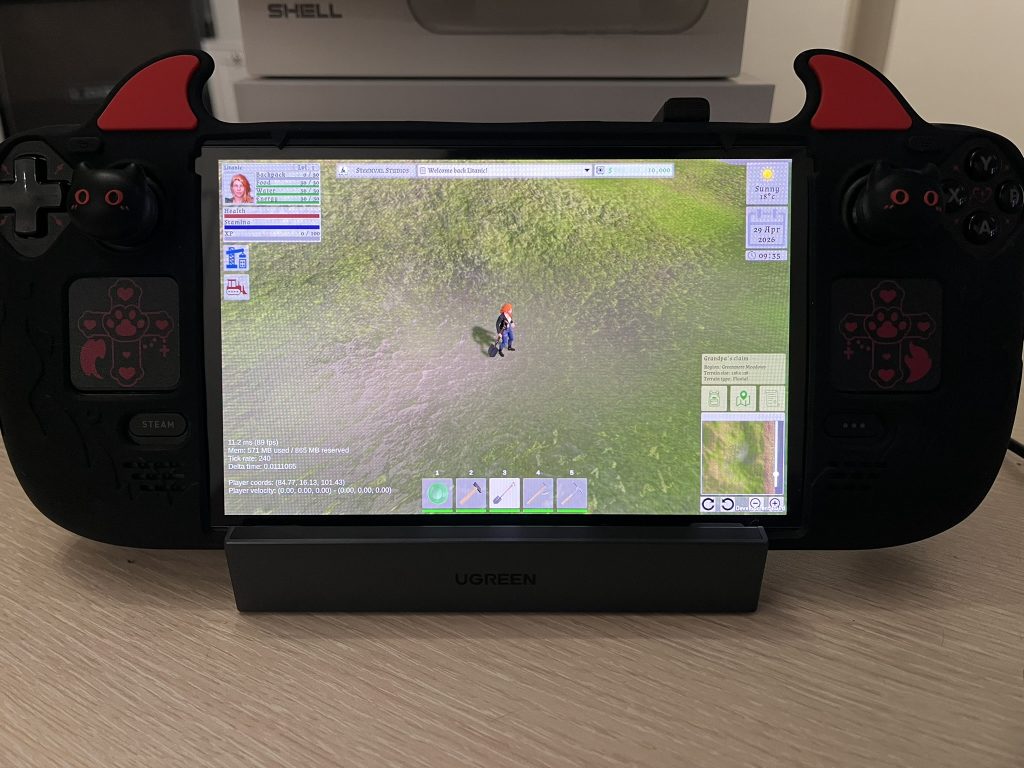
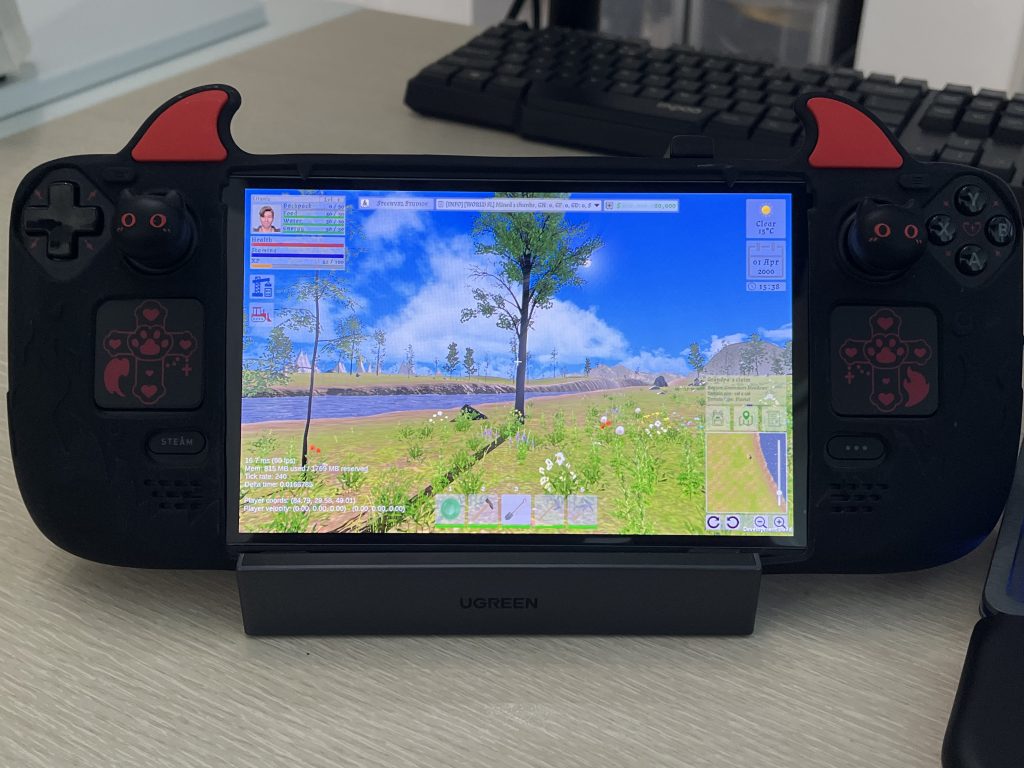
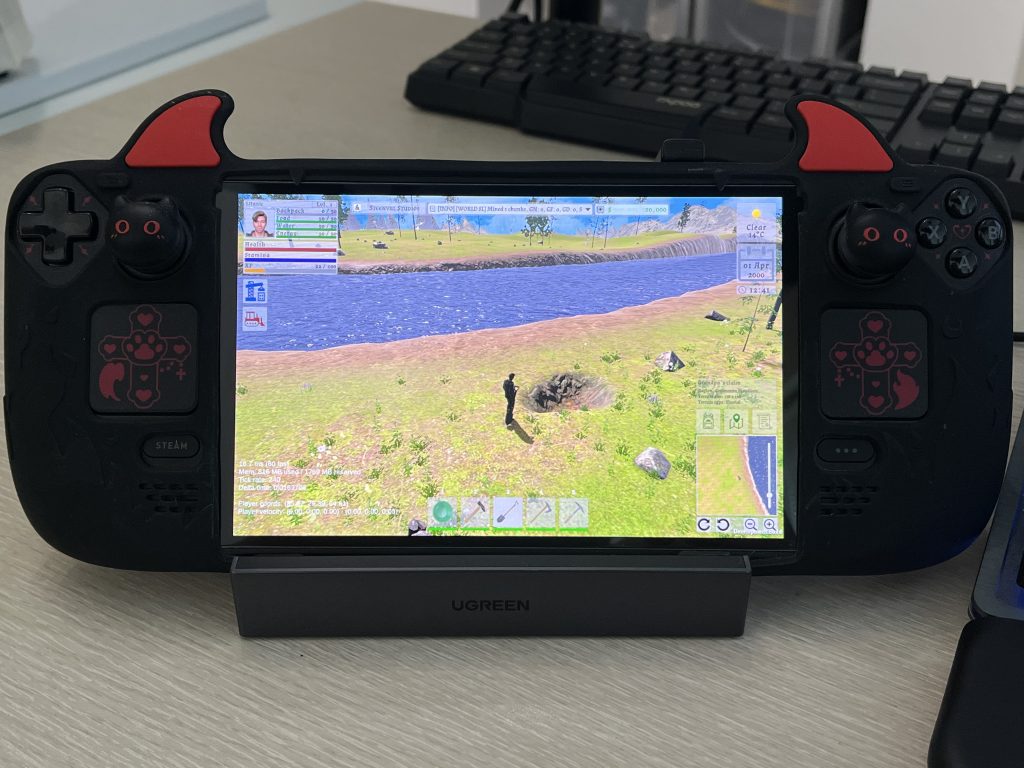
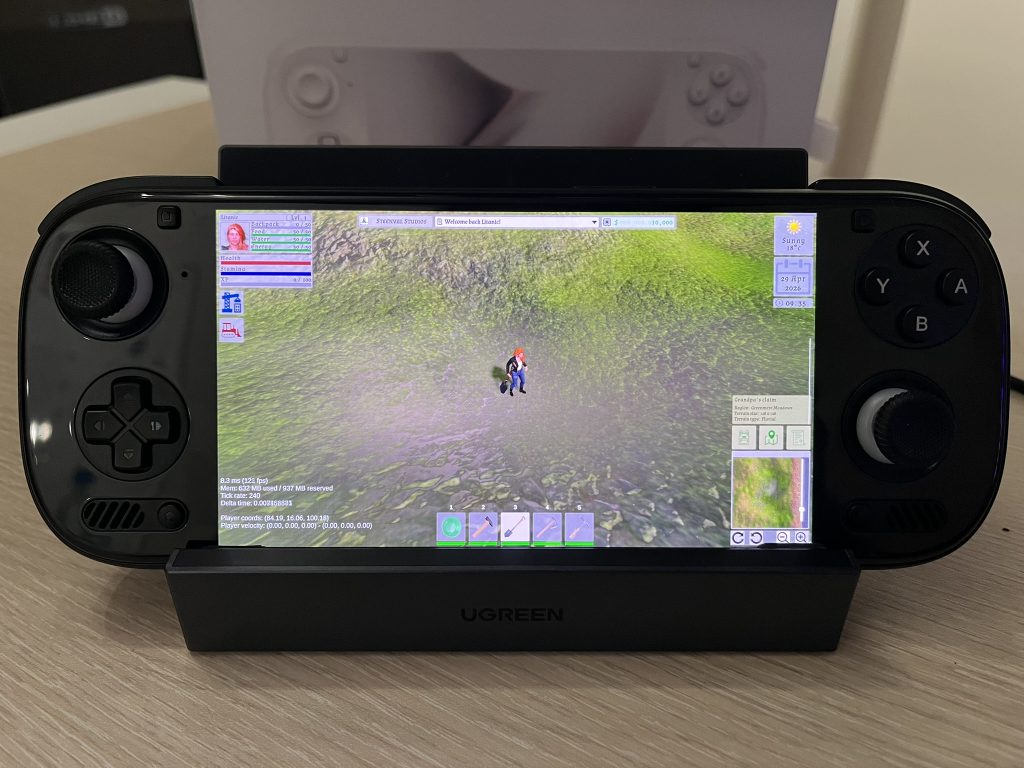
GoldClaim is actively developed and validated on handheld platforms to ensure a consistent experience across a wide range of hardware. Alongside desktop testing, the Steam Deck serves as the primary handheld target, while the AYN Odin 3 is used to validate Android support, memory usage and overall performance on ARM-based devices.
Steam Deck
The Steam Deck serves as one of GoldClaim’s primary validation platforms throughout development. Rather than treating handheld support as a post-release consideration, gameplay, controls, performance and user interface are continuously tested on Valve’s handheld to ensure a native experience. This development approach helps guarantee that gameplay remains intuitive across both desktop PCs and portable devices while maintaining smooth performance under real-world conditions.
Regular testing on the Steam Deck has also influenced several design decisions, including user interface scaling, controller navigation, camera controls and overall gameplay readability. By validating these systems throughout development instead of near release, GoldClaim is being built with handheld gaming as a first-class experience rather than a secondary platform.
Android – AYN Odin 3
Android support is being actively validated throughout development using the AYN Odin 3 handheld. Testing on ARM-based hardware helps verify performance, memory usage and overall gameplay responsiveness on devices with significantly lower power budgets than modern desktop PCs. By integrating Android testing into the development process, GoldClaim is designed to scale efficiently across a broader range of hardware without compromising the core gameplay experience.
Regular validation on the Odin 3 also provides valuable insight into touch controls, controller input, user interface readability and battery-conscious performance optimizations. This continuous testing ensures that Android support evolves alongside the PC version, rather than being treated as a separate port later in development.
Looking ahead
GoldClaim: Starfall Nuggets continues to evolve with every milestone reached during development. As new gameplay systems, technologies and production workflows are completed, this Development Showcase will expand with additional articles, screenshots and behind-the-scenes insights. Whether you’re interested in game design, software engineering or simply following the journey of an independent game, we hope this showcase provides an informative look into the creation of GoldClaim and encourages you to visit again as development progresses.
Keep posted for more developments
GoldClaim continues to evolve every week, and so will this showcase. As development progresses, new chapters will be added covering additional gameplay mechanics, technical systems, world-building and production workflows. Whether you’re interested in game development, technical implementation or simply following the project’s journey, we invite you to revisit this page as it grows alongside the game.