
Read time:
Hey everyone,
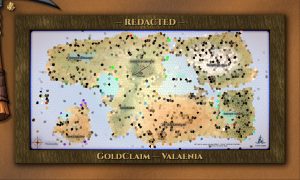
Another milestone has been crushed: The world map of GoldClaim: Starfall Nuggets. GoldClaim is the name of the franchise, Starfall Nuggets is its first title, and Valaenia is the name of the land where it all takes place.
The World Map of GoldClaim
Artistic endeavor — The world I’ve designed came from a blank canvas. A geology-first design has been chosen to complement the world of GoldClaim, digitally hand-drawn and finally painted with over a thousand brushstrokes, over a hundred hours of work in total. I’ve actually starting painting this world in august 2025, but I recently picked it up again for the next milestone, and the result is an emergent landscape with a multitude of painted biomes, diverse regions and strategically placed settlements. More about this can be read on The Lands of Valaenia page.
A large world — The map is 64 x 32 km, or 2048 km². Valaenia is more land than sea, is divided into 7 regions, has 12 settlements (excluding frontiers which are emergent), sports over 300 km of road and will ensure well over 50 claims (exact number is known, but is considered a spoiler). All of this has already been set in stone after many design iterations and refinements. I might give the finishing touch to just the scenery and terrain textures, but for now this version is already deemed MVP-worthy.
The world map — I have dedicated a whole chapter about the world map’s regions and settlements. It has all the visuals of every region in full detail. This map will also serve as the overworld map for travelling. Travelling will happen visually in the overworld as you travel with your prospecting equipment or mining rigs, or are just out to scout/prospect new areas. The level of control isn’t fully determined yet.
World-first design — After the game-idea was concluded, everything else emerged from the world itself. The land didn’t take shape visually when early game design started, but it did contextually. Regions, biomes, geology, settings and how the land itself emerged came first. Game mechanics, characters, stories, mining and RPG features: These are either based on or emergent from the world’s design. The result is a coherent world, where everything has meaning and makes sense. This also serves as a guide for the lore.
Lore-driven world — Valaenia has its own lore dating back to the far past. The main story will be driven by it, and many books can be found in the game to strengthen this and provide more context. In fact, 9 ‘books’ already have been written in typical RPG-style, as lore-facts had to be set in stone early. The lore is an ongoing project by itself, as the world has just taken shape in higher detail.
Temporary icons for settlements — The map currently uses icons to indicate towns, villages, cities, industrial places, parts traders and such. I make all the art myself by hand, so I balance this with development on the engine as it takes a lot of time. I will give each settlement a custom design, but its priority lies outside the MVP as each icon takes about 5 hours to create and master. This will snowball as more PoIs are on the way.




Next milestone
Mining Claim Engine — Now that the geology, regions and overall space are in full detail, I can finalize the requirements for the claim engine and finish building the Claim Generator. As claim resources are deterministic in GoldClaim like in mining simulators, a major ingredient for the hardware requirements became apparent, as each mineable chunk requires notable disk and memory storage.
Quick preview, the largest claim — I believe I truly nailed this: The largest supported claim will be a whopping 4 km² and have a mining depth of at least 20 meters — that’s 80M worth of chunks, as each chunk is 1 m³. To give an idea: One of the large excavators in GoldClaim scoops 16 chunks (4x2x2 scoop pattern) — which is ridiculous but realistic for large excavators — and it’ll still take over hundreds of gamehours with 10 of those to fully mine that area. I fully did the math on that with the game simulation speed (currently 48x, meaning 30 minutes is 1 game day) and 8 working hours for your crew to operate the other machines. Ignoring the transport of paydirt from the digsite to the washplant, it still takes 5M scoops, roughly 140 hours with a crew of 10 for each real-world second that the scoop takes.
Motherlodes on claims — The intention of these huge claims is not to fully excavate them (well you can), but to find riches or even better, the motherlode. Will there be more motherlodes per claim? Yes that’s possible, they can even intersect (without exploding riches), but it’s also possible the land has determined it’s just partially on your claim, or not at all. This right here, this is out of my control once I finished its design — even I cannot predict anymore whether your very specific claim will or won’t have a high concentration of riches — this is GoldClaim.
No RNG — There’s no random roll or reroll on resources. Once you start a new game, the world has been decided. That might scare people after having 100 hours in a single playthrough, but there’s no need to worry — during prototyping I will observe from a meta-perspective whether the riches of the land aligns to its design. I won’t be able to see where, but whether the riches of the world have been distributed properly across a multitide of world generations. This is more to prevent countless rerolls when a new game is started, as it will reroll when thresholds have been crossed (e.g. the land has too little or too much riches). From that point on, that’s it, no random generation whatsoever.
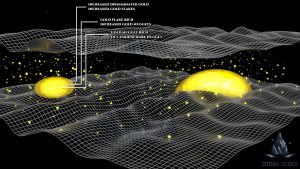
Determinism to the max — Even the visuals of the nuggets are determined, which is probably the most crazy invention I’ve given the game. Understated? You tell me, but what matters to me is that it was fun to design and create. I’ve dedicated a page to this as it’s part of the milestone which I’ve completed already. It still receives updates now and then as visuals are being improved and some tweaks can be made.
Platform support — What’s more exciting is platform support: This claim has a calculated memory-footprint of 916 MB, and ~92 MB compressed for save games thanks to my custom chunk-format and compressor. This means a Nintendo Switch gen 1 (barely 3GB of mem available) can run this claim to at least that depth — this is a huge win! Thanks to extensive calculating of both processor and memory requirements, I could publish the minimum and recommended system specs at this early stage. This can be found here.
More details on the website now
Finally I’ve added a lot more context and visuals to each page of steenval.com. There’s a better categorization, indexes and separation of concerns. I’ve also changed the tone between pages and posts to create a distinction between factual game details and progress updates.
— Litanic
Discover more from STEENVAL STUDIOS
Subscribe to get the latest posts sent to your email.